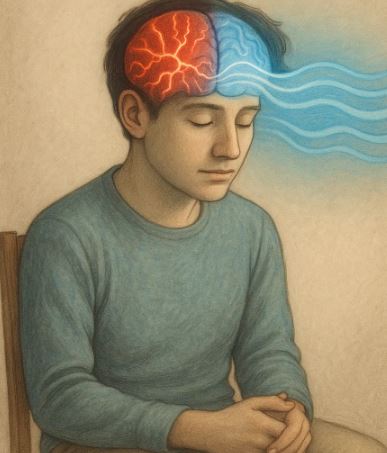
Imagine a night when the phone rings and life suddenly turns urgent — someone needs to be taken to the hospital, or tomorrow’s uncertainty feels unbearable, and you have no one to talk to. Or maybe anger has risen so fast that your body trembles, and you know words will only make things worse.
In such moments, when your mind feels hijacked by emotion, there is one silent tool that can restore balance — your handwriting.
Writing, when done with awareness, is more than communication. It is a body–mind language that can both mirror and reshape how you feel. Every stroke carries your mood; every curve, pause, and pressure records the whisper of your nervous system. The same hand that shakes with panic can, through repetition, learn to steady the heart.
When Emotion Enters the Pen
- Our handwriting reflects our emotions.
Even when our face stays still, the page shows what’s hidden inside. When fear tightens the breath, letters shrink. When relief arrives, they widen, opening like shoulders after a sigh. Your handwriting is a living reflection of the body’s internal weather. - Handwriting combines movement and mood
It’s not a fixed personality trait but a moment-to-moment signal of your state. Anxiety grips harder and rushes the strokes; calmness softens the hold and slows the pace. The pen becomes a seismograph of emotion. - Four main clues reveal emotional shifts:
Speed: fast when anxious, steady when composed.
Pressure: heavy when angry or tense, light when relaxed.
Slant: forward when eager or emotional, backward when fearful or withdrawn.
Rhythm: jerky in distress, smooth in calm
The Science of the Moving Hand
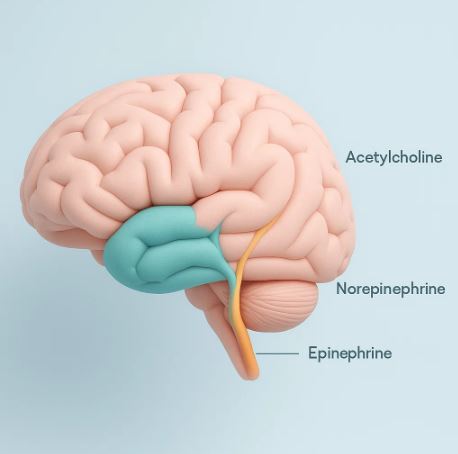
Stress and serenity both leave fingerprints on your writing because the nervous system controls every stroke
- During agitation, adrenaline tightens muscles, increasing pen pressure and tremors.
- In peace, the vagus nerve activates the parasympathetic system, easing movement and restoring rhythm.
This creates a feedback loop: the brain plans motion, the hand executes it, and your current state colors the result. The page becomes a slow-motion record of body language — proof that your inner state and outer action are inseparable.
Reading Your Own State
Try this: write a short line like “The quick brown fox jumps over the lazy dog” twice — once normally, then slower.
Now observe. Do letters crowd? Does the line tremble or tilt? Is pressure uneven?
These aren’t flaws — they are signals. They reveal whether your body is rushing or resting, centered or scattered. Learning to read them is learning to listen to your own nervous system.
How to Reset Your State Through Writing
When anger, anxiety, or tears threaten to spill over, writing becomes a form of self-regulation. Here’s how:
- Loosen your grip. Hold the pen slightly higher to reduce muscle tension.
- Breathe slower. Exhale longer than you inhale while writing.
- Write 20% bigger. It opens body posture and builds quiet confidence.
- Round the corners. Soft curves invite gentleness, replacing aggression.
- Pause at the margins. Rest the pen, breathe, then continue.
Even one minute of rhythmic writing can shift your nervous system from chaos to control. Each stroke activates calm — through touch, breath, and predictable movement.
A One-Minute Ritual for Emotional Emergencies
When panic or rage strikes, try this practice:
- Sit down and breathe deeply once.
- Write a simple phrase like “I am safe” or “Peace is returning.”
- Repeat it slowly 20 times, watching your letters stretch and soften.
- Between every few lines, release your grip and exhale.
- Let the motion become your focus, not the meaning.
What happens next is biochemical: your vagus nerve quiets the heartbeat, GABA levels rise, and dopamine gently rewards your persistence. Your body begins to believe the message your hand writes.
From Calming Moments to Character Building**
Writing doesn’t just manage emotions — it gradually rewires personality through neuroplasticity.
- Clear handwriting reflects inner order. People with consistent script often maintain organized spaces; discipline on paper becomes discipline in life.
- Proper handwriting reveals depth. The patience and precision it requires cultivate focus and clarity of thought.
- It teaches self-dialogue. Writing is a quiet conversation with yourself — a mirror where understanding begins.
- It strengthens neural pathways. Coordinated movement, rhythm, and language integrate emotion and logic, helping you “connect the dots” inside your brain.
As handwriting steadies, speech becomes composed; as rhythm returns to your strokes, flow returns to your thoughts. Over time, handwriting becomes character training — shaping not just your script but your self.
The Gentle Power of the Pen
Handwriting can’t diagnose or define you. But it can reflect your emotional weather — and, more importantly, give you the power to change it.
When nerves shake, thoughts scatter, or anger blinds, the act of writing offers something rare in chaos: rhythm, control, and return.
So next time life overwhelms you — when there’s no one to call and your heart is louder than reason — pick up a pen.
Let your breath follow the movement, your mind follow the ink, and your body follow the calm.
In that quiet space between strokes, you’ll find what machines can’t teach and words alone can’t hold — your own ability to rewrite peace.