We often blame stress, overthinking, or bad sleep for our confusion and lack of focus. But sometimes the real reason is hidden inside our brain chemistry.
Three lesser-known hormones—acetylcholine, norepinephrine, and epinephrine—play a massive role in:
> how clearly we think
> how fast we react, and
> how confidently we make decisions.
Here’s a simple, friendly breakdown of what each of them does, how they’re made, what foods support them, and what happens when they fall out of balance.
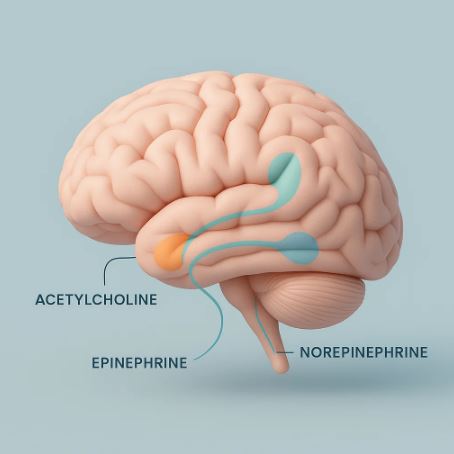
1. Acetylcholine: The Focus and Learning Hormone
Acetylcholine is the hormone that quietly sits in the background and makes your brain sharp. It helps you
>To focus,
>To learn faster
>To remember things clearly, and
>To enter deep thinking modes.
Your brain produces acetylcholine from a nutrient called “choline“, which comes from certain foods. This hormone is like the director that keeps your mental world organized—your thoughts, your attention, your clarity, and even your creativity depend on it.
How it’s produced
Acetylcholine is made when your brain combines choline with acetyl-CoA.
The brain stores it in nerve endings and releases it whenever you need concentration or clarity.
Foods that support acetylcholine
To maintain healthy acetylcholine levels, include:
- Eggs (one of the best sources of choline)
- Fish
- Chicken
- Peanuts
- Soybeans
- Broccoli
- Brussels sprouts
- Whole grains
These foods help your brain produce enough acetylcholine to keep your memory and attention strong.
Detailed functions of acetylcholine
- Helps with deep focus
- Supports memory formation
- Keeps thoughts organized
- Boosts learning ability
- Helps you enter “flow state”
- Supports calm, steady concentration
When acetylcholine is out of balance
Low levels make you feel:
- Foggy
- Sluggish
- Confused
- Easily distracted
- Forgetful
- Mentally dull
This can affect decisions, reaction time, and even confidence. When acetylcholine drops, the world feels blurry even when your eyes are open.
2. Norepinephrine: The Alertness and Mental Energy Hormone
Now, that we have finished understanding acetylcholine, it’s time to meet norepinephrine—your natural caffeine.
This hormone :
>wakes up your brain,
> helps you react fast, and
> gives you mental energy.
It is produced by a small area in the brain called the locus coeruleus, and is released whenever you need to stay alert or when something demands your attention.
How it’s produced
Your body makes norepinephrine from the amino acid tyrosine >> which is converted into dopamine >>and then into norepinephrine.
This hormone is part of your natural alert-system and is released during thinking, planning, focusing, and mild stress.
Foods that support norepinephrine
Since norepinephrine is made from tyrosine, foods rich in protein help:
- Almonds
- Bananas
- Eggs
- Fish
- Chicken
- Cheese
- Pumpkin seeds
- Dark chocolate
These foods help maintain steady alertness and mental stamina.
Detailed functions of norepinephrine
- Helps you stay awake and alert
- Improves focus and attention
- Boosts motivation
- Sharpens decision-making
- Enhances reaction time
- Gives mental energy during tasks
When norepinephrine is out of balance
Low levels feel like:
- Slow thinking
- Low motivation
- Poor concentration
- Brain tiredness
- Distractibility
- Mild depression-like mood
While High levels feel like:
- Too much alertness
- Restlessness
- Stress
- Racing thoughts
Balanced norepinephrine feels like being awake, clear, and mentally strong.
3. Epinephrine: The Quick-Action, High-Energy Hormone
After exploring norepinephrine, let’s move to epinephrine.
This one is also known as adrenaline—the hormone that gives you power during emergencies. Epinephrine makes
> your heart beat faster,
>sharpens your senses, and
>gives you instant energy.
Unlike the other two, epinephrine is not for deep thinking. It is for survival, quick decisions, and fast action.
How it’s produced
Epinephrine is produced in the adrenal glands, right above your kidneys. The body converts norepinephrine into epinephrine, especially during stress or excitement.
Foods that support epinephrine balance
You don’t need to “increase” epinephrine; you need to keep your adrenal glands healthy:
- Vitamin C–rich fruits (oranges, kiwis, lemons)
- Magnesium-rich foods (dark leafy greens, nuts, seeds)
- Whole grains
- Lentils
- Healthy fats (avocado, olive oil)
These foods support stable adrenaline levels so your energy stays balanced.
Detailed functions of epinephrine
- Gives instant energy in emergencies
- Increases heart rate
- Sharpens awareness
- Helps quick decisions
- Boosts physical strength temporarily
- Supports “fight or flight” response
When epinephrine is out of balance
Low levels feel like:
- Fatigue
- Low physical energy
- Difficulty reacting quickly
High levels feel like:
- Anxiety
- Stress
- Racing heart
- Panic
- Feeling overwhelmed
- Difficulty focusing
Balanced epinephrine keeps your body calm but ready.
You may also like to read:Oxytocin and Cortisol: How One Hormone Calms Your Body While the Other Creates Stress