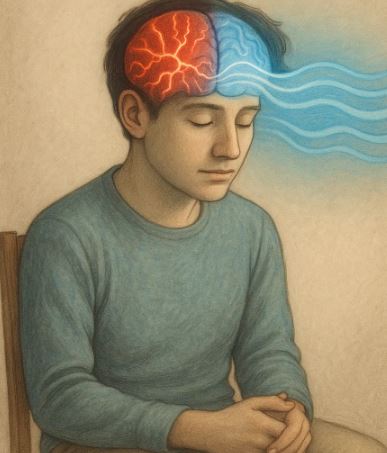
Criticism impacts far beyond the present moment. Have you ever felt anxious or unsure while doing something you were once judged for — as if the old words still echo inside you? Those echoes aren’t just memories; they are biological imprints. When harsh feedback or constant judgment repeats, the mind begins to blur the line between past and present danger. It remembers and reacts even when it should not, replaying the same alert that once protected you. Over time, this becomes more than emotion — it becomes a physical state, shaping confidence, behavior, and even personality.
When someone faces repeated emotional stress — like criticism, fear, or feeling unseen — the body learns to stay in survival mode. This state is known as chronic stress activation, and two major systems play a role:
- Mast cells, immune cells responsible for allergic and inflammatory responses, begin releasing chemicals such as histamine even without any real danger.
- The amygdala, the brain’s fear center, becomes hypervigilant and starts labeling even harmless situations as threats.
Over time, this creates a learned biological loop where the nervous system forgets what safety feels like. Even when life becomes calm, the body keeps acting as if something bad might happen. This is what being “left on alert” really means — your body keeps defending you long after the threat is gone.

Criticism doesn’t just end with words; it lingers like an invisible observer. Each harsh remark trains the mind to watch itself, to hesitate before expressing or attempting. The body, too, becomes an accomplice — keeping score of those old moments of fear.
Mast cells, designed to defend against real danger, begin releasing stress chemicals even at the smallest sign of disapproval. They flood the system with histamine, tightening the chest, clouding focus, and creating unease where none is needed.
It’s as if the nervous system installs an internal critic that never leaves. The mind scans every move for mistakes, and the body responds as though danger still exists. This is why even years later, one can feel a sudden rush of anxiety or self-doubt when facing evaluation or comparison. The system, once meant to protect, ends up obstructing peace — a guard that forgot to stand down.
Reintroducing Safety to the Nervous System
Fortunately, the brain and body can unlearn this pattern. The key lies in rebuilding a sense of safety and self-trust. When a person practices self-compassion — speaking kindly to themselves, reasoning gently through fear, or forgiving past mistakes — they send a signal to the brain that the danger has passed.

Over time, this process rewires the memory network, calming the overactive stress response. The mind begins to associate confidence, not fear, with tasks or memories that once triggered anxiety.
Recognizing When to Defend Against Criticism
Not every opinion deserves space in your head. But many people instinctively go into defense mode because old experiences of being judged or rejected still influence their reactions.
Here are signs that your system is reacting defensively rather than logically:
- You feel physical tension (tight chest, stomach discomfort, shallow breathing).
- You start replaying the conversation repeatedly in your mind.
- You feel the urge to explain yourself to prove your worth.
When these signs appear, pause before reacting. It means your old “alert system” has been triggered. Instead of arguing or retreating, remind yourself:
“Their opinion doesn’t define me. My worth isn’t up for comparison.”
Refusing Comparison as a Form of Self-Protection
Comparison is one of the most common emotional traps. Whether it’s about success, appearance, or skill, comparing yourself to others activates the same stress circuits as direct criticism.
To stop this:
- Redirect focus inward. Notice progress within yourself rather than competing with others.
- Limit exposure. Reduce time around environments that thrive on constant comparison.
- Practice emotional neutrality. When someone outperforms you, appreciate them without devaluing yourself.
Remember, comparison is not motivation — it’s a distraction from your individual path.

Techniques to Release Old Trauma and Reset the System
Healing doesn’t mean erasing memories; it means teaching your body that those memories are no longer threats. Here are effective techniques:
- Inner reassurance: Speak to yourself as you would to a loved one. Say, “You’re safe now,” especially during anxiety spikes.
- Grounding through senses: Notice what you can see, hear, and touch in the present moment. It signals to your brain that the danger isn’t real anymore.
- Body relaxation rituals: Gentle breathing, stretching, or humming helps release stored tension.
- Rewriting associations: Revisit an old stressful memory and visualize it ending peacefully. This reprograms your nervous response.
- Consistent self-compassion practice: Kind self-talk and journaling slowly convince the brain to stand down from chronic alert mode.
The Takeaway
When the body forgets how to relax, confidence and clarity suffer. But with awareness and gentle retraining, it’s possible to turn off the old alarm that’s been ringing for years. Healing starts when you stop defending yourself from the past — and start teaching your body what peace actually feels like.