When Your Brain Stops Listening to Calm!
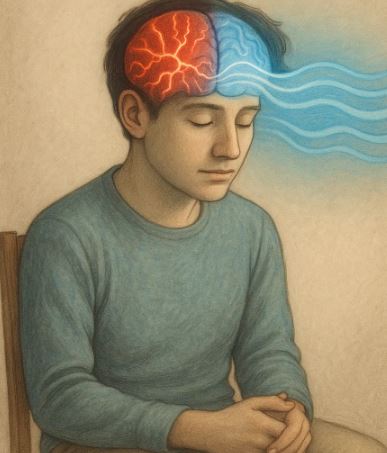
Ever wondered why, during long stretches of anxiety or stress, your mind just doesn’t calm down — even when you try to relax?
You breathe, you rest, maybe you even meditate… but your brain keeps running at full speed.
That’s what neuroscientists call “GABA resistance.”
It means your neurons have stopped listening to the brain’s main calming messenger — GABA (gamma-aminobutyric acid).
1. GABA and Its Lock-and-Key Mechanism
Think of GABA as the key and your brain’s receptors as the locks.
Normally, when GABA binds to its receptors (called GABA-A and GABA-B), it opens a channel that lets calming ions flow into nerve cells — slowing them down. That’s how your brain says, “Relax, everything’s okay.”
But in chronic stress or long-term anxiety, this smooth communication starts breaking down. The keys are still there, but the locks no longer fit quite right.
2. What Long-Term Stress Does to GABA Receptors
When the body stays in “fight or flight” for too long — due to trauma, migraines, overthinking, or chronic pain — it keeps releasing stress chemicals like glutamate, cortisol, and norepinephrine.
Over time, this causes subtle but serious changes in the brain:
- Receptor down-regulation:
The brain becomes less sensitive to GABA’s signal by reducing or dulling its receptors.
→ GABA is still produced, but it no longer has the same calming power. - Receptor remodeling:
Chronic anxiety can actually change the shape of GABA receptor subunits, making them less responsive. - Inflammatory interference:
Brain inflammation (from stress, migraines, or even gut issues) releases chemicals that block GABA activity. - Hormonal suppression:
High cortisol or low progesterone levels can weaken GABA’s effects — that’s why many people feel more anxious during hormonal dips or chronic fatigue.
In short, the brakes wear out even while the accelerator stays pressed.
3. Why This Feels So Unfair
When stress hits, you expect your body to self-regulate — but instead, it snowballs.
That’s not lack of willpower or “overreacting.” It’s literally a mechanical issue in your brain’s wiring.
Your neurons are supposed to balance excitement and calm. But when GABA receptors weaken, excitation spreads unchecked — leading to racing thoughts, panic, sensory overload, or migraines.
4. The Good News — GABA Receptors Can Recover
The brain is wonderfully adaptable. With the right nutrients and calming habits, your GABA system can repair itself.
- Magnesium, zinc, and taurine rebuild receptor responsiveness.
- Slow breathing, yoga, and mindfulness upregulate GABA-related genes.
- Deep sleep resets receptor sensitivity nightly.
- Reducing caffeine and screen overstimulation protects the calm-brain network.
Even in studies, people show measurable increases in GABA receptor activity after a few weeks of consistent relaxation practice.
5. The GABA–Migraine Connection
People who experience migraines often live with what neurologists call a “hyperexcitable brain.”
This means their neurons fire too easily — light, sound, or even hunger can set off a storm.
Modern imaging shows that migraine sufferers typically have:
- Lower GABA levels in the cortex (especially visual areas)
- Higher glutamate levels — the opposite of calm
- Reduced receptor sensitivity
Here’s how a migraine can unfold:
- Glutamate overstimulates neurons.
- Neurons fire too fast, releasing inflammatory chemicals.
- GABA tries to step in — but with low levels or weak receptors, it can’t stop the wave.
- Blood vessels dilate, pain nerves fire, and sensory overload begins.
This is why migraine prevention today includes GABA-enhancing strategies — from medications like gabapentin to natural supports such as magnesium, theanine, and yoga-based relaxation.
6. Natural Ways to Rebuild Your Calm
You don’t need a lab to support your GABA system — many everyday activities already do the job beautifully.
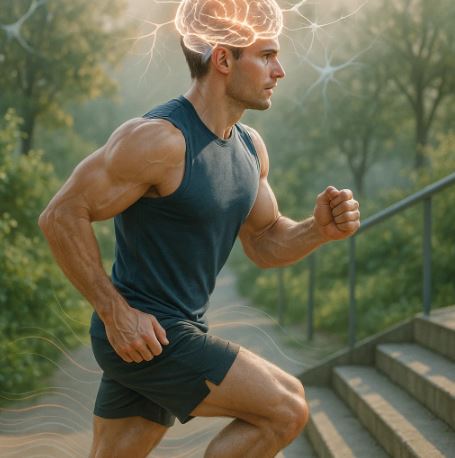
Exercise (especially rhythmic ones like boxing or running)
Boosts brain GABA by up to 30%, burns excess glutamate, and improves receptor function.
Writing or Calligraphy
Organized thought and gentle hand movements calm the prefrontal cortex — where GABA helps regulate emotions.
Slow Breathing and Pranayama
Activates the vagus nerve, which sends GABAergic signals throughout the body. Studies show higher GABA levels after 20 minutes of deep breathing.
Dark Chocolate
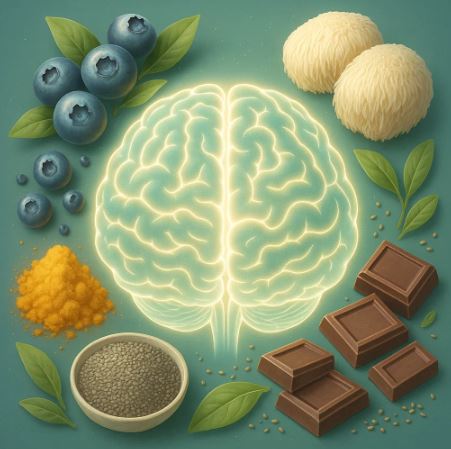
Rich in magnesium and theobromine, which enhance GABA function and lift mood.
Adequate Sleep
Each night, the brain restores its GABA–glutamate balance — that’s why even one good night can bring dramatic calm.
7. Nutrients That Help (Especially for Sensitive Nervous Systems)
| Nutrient | Role | Natural Sources |
|---|---|---|
| Magnesium (glycinate, threonate) | Improves GABA binding | Nuts, dark chocolate, avocados |
| Vitamin B6 (P5P) | Converts glutamate → GABA | Chickpeas, potatoes, sunflower seeds |
| Zinc | Supports receptor structure | Pumpkin seeds, seafood |
| Taurine & Theanine | Calming amino acids | Green tea, fish, eggs |
| Probiotics | Produce GABA in gut | Yogurt, kefir, fermented foods |
Avoid MSG, aspartame, and excess caffeine — they overstimulate glutamate and block GABA’s effects.
In Essence
When your mind feels out of control, it’s not a personality flaw — it’s chemistry asking for balance.
GABA isn’t gone; it’s just waiting for your brain to start listening again.
With consistent nourishment, rest, and calming movement, the nervous system relearns how to slow down.
Each breath, each quiet walk, each magnesium-rich meal helps your neurons remember peace.
Because even the most overworked brain still carries the blueprint for calm — and GABA holds the key.