Unavoidable Lack of sleep
In today’s busy world, sleep deprivation has become common for students, working professionals, and even homemakers. One night of inadequate sleep can make the mind foggy and the body unusually sensitive. But with the right techniques, you can protect your energy and prevent further stress on your system.
Here are some quick practical solutions and precautions
How to Manage Practically (Simple, Quick Fixes,No Caffeen)
✔ 1. Cool your forehead if it heats up
When you don’t sleep well, forehead nerves often become hot and overactive. Spraying mild cold water works faster and safer than caffeine.
✔ 2. Reduce acidity with a cold patch
Place a cold pack for 15 minutes on the stomach above the belly button. It calms irritation and helps settle the nervous system.
✔ 3. Magnesium + calcium for tiredness
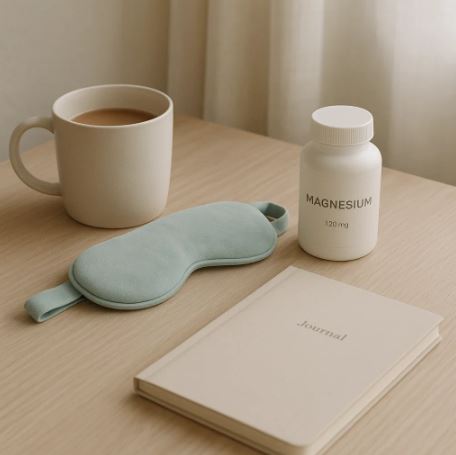
These minerals support muscles and nerves. On low-sleep days, they reduce sensitivity and fatigue.
✔ 4. For body aches: light massage or steam
Gentle massage boosts circulation. A mild steam bath helps the muscles relax.
Tying soft support cloth around the thighs also helps because legs carry the most load when energy is low.
✔ 5. If you feel extremely drained: small glucose sips
(Not for diabetic readers.) Tiny sips throughout the day prevent sudden drops in energy.
✔ 6. Instant energy boost: ice cream
A small portion quickly raises glucose and cools the system, helping you feel alert.
✔ 7. Warm foot-soak
A warm water soak relaxes nerves and pulls excess heat away from the head.
✔ 8. Extra electrolytes
Mix water + a pinch of salt + lemon + a little jaggery/glucose. It keeps your system stable.
✔ 9. Protein + complex carb breakfast
Eggs, curd with banana, or seeds-based breakfast maintain blood sugar and improve focus.
Don’ts for a No-Sleep Day

✘ 1. No exercise
Your heart rate and cortisol are already high. Exercise stresses them further.
✘ 2. Don’t skip meals
Skipping meals leads to blood sugar crashes, which worsen anxiety, dizziness, and headaches.
✘ 3. Avoid extreme heat or cold
Temperature shock can overload immunity and trigger migraines.
✘ 4. Avoid fermented foods
They increase histamine, acidity, and sensitivity—especially dangerous on low-sleep days.
✘ 5. No emotional strain
Arguments or heavy emotional talks hit harder when the brain is tired and can raise cortisol sharply.
Tips for Students Who Bear the Real Heat

Sleep loss is common among students, but smart adjustments help keep performance steady.
✔ Use Pomodoro technique
Study for 25 minutes → rest 5 minutes. Tired brains work best in short cycles.
✔ Write more than you read
Writing notes improves retention on low-energy days.
✔ Do 4-4-8 breathing
Calms nerves, sharpens focus, and reduces the stress response.
✔ Light stretching or slow walk
Keeps the body awake without stressing it.
✔ Study in a cool, quiet environment
Slightly cool air improves alertness.
✔ Micro-naps (10 minutes)
Restoring even 10 minutes helps avoid cognitive mistakes.
Why You Should Avoid Sleep Deprivation
In the end, even though these solution could works as quick fixes , it is beast to avoid constant sleep deprivation. Consistent lack of sleep increases inflammation, weakens immunity, stresses the heart, and disrupts hormones. Over time, it can affect memory, skin health, digestion, and emotional balance. Protecting your sleep is one of the simplest and strongest ways to stay healthy.