Blood pressure, the force that decides the entire biology and rhythm of the human body, is one of the most sensitive physiological properties we possess. It responds to even the smallest internal or external changes—far beyond the usual suspects like cholesterol or emotional stress. In reality, everyday habits, overlooked bodily signals, and subtle environmental shifts can trigger notable fluctuations in BP, often without us realizing it.
General Day-to-Day Activities Causing High BP
We often strain our system without awareness. Small daily actions—things we label as “normal” or “harmless”—can create a ripple effect inside the autonomic nervous system. Our body absorbs these micro-stresses silently: irregular meals, long conversations, dehydration, heat, cold, and even decision pressure.
What we treat casually can, over time, become powerful triggers that push blood pressure upward. Recognizing these day-to-day patterns is the first step toward bringing stability, balance, and respect to our biological boundaries.
| Day-to-Day Activity Causing BP Surges | Small Explanation |
|---|---|
| Migraine | Pain + trigeminal nerve activation can temporarily raise BP |
| Vagus nerve stimulation disturbances | Sudden parasympathetic rebound can create BP fluctuations |
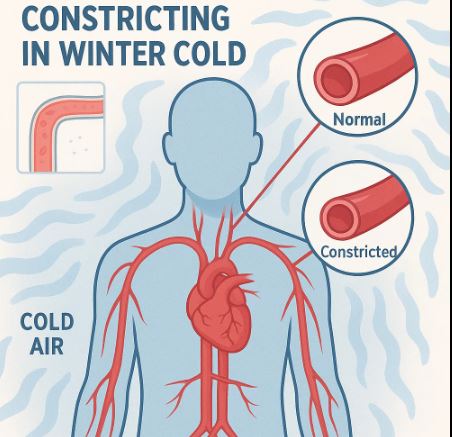
| Exposure to extreme cold | Cold triggers vasoconstriction → BP rises sharply |
| Eating late in Vata body types | Digestive irregularity increases sympathetic drive |
| Extreme summer heat (Pitta aggravation) | Heat stress increases heart rate and fluid loss, raising BP |
| High altitude | Low oxygen causes the body to increase BP to compensate |
| Over-exercise | Excess adrenaline and muscle demand raise BP temporarily |
| Fear or anxiety | Activates fight-or-flight response → BP spikes |
| Confusion or forced decision-making | Mental stress causes sympathetic surge |
| Breathing issues (blocked nose, shallow breathing) | Reduced oxygen triggers BP rise to maintain supply |
| Not drinking enough water | Mild dehydration contracts blood vessels → BP increases |
| Low magnesium / low Vitamin D3 / high calcium | Electrolyte imbalance affects vascular smooth muscle |
| Talking non-stop | Continuous stimulation + shallow breathing raises BP |
| Poor sleep (added as you instructed) | Poor rest increases cortisol and sympathetic activation |
| Full bladder (second extra cause) | Bladder stretch reflex temporarily increases BP |
Deep, Hidden, and Rare Reasons Behind BP Fluctuations
Beyond the visible daily habits lies another layer—the hidden physiology. There are mechanisms we rarely talk about: adrenaline bursts, histamine spikes, gut–brain disturbances, electrolyte shifts, HRV collapses, REM disruptions, and sympathetic surges.
These reasons are subtle, often silent, and deeply interwoven with the body’s internal wiring. Many people experience BP fluctuations without knowing that these rare or lesser-known processes are responsible. Understanding them allows us to decode our body’s sensitivity, prevent sudden spikes, and respond intelligently to its warning signals.
| Deep Reason / Hidden Reason / Rare Causes | Short Explanation |
|---|---|
| High adrenaline surges | Sudden fight-or-flight activation spikes BP |
| Sudden blood sugar drops | Low glucose triggers adrenaline release → BP rises |
| Gut inflammation | Disturbed gut–brain axis increases sympathetic tone |
| Histamine release | Allergic response causes vascular instability |
| Hormonal fluctuations | Thyroid, PMS, cortisol shifts influence BP regulation |
| Electrolyte shifts | Low potassium/sodium alters vascular contraction |
| Dehydration from AC cold + low humidity | Hidden dehydration tightens vessels |
| Poor sleep / REM disruption | Fragmented sleep raises cortisol and BP |
| Night-time sympathetic activation | Night terrors/dream stress spike BP suddenly |
| Standing up too quickly | Orthostatic imbalance causes rebound BP rise |
| HRV collapse | Low HRV = poor autonomic balance → BP instability |
| Strong emotions | Intense feelings trigger adrenaline surges |
| Infections | Immune activation temporarily raises BP |
| High salt + low water | Salt without hydration increases volume load |
| Overuse of stimulants | Caffeine/energy drinks elevate sympathetic activity |
| Neck tension / cervical issues | Tight neck muscles irritate autonomic nerves |
| TMJ tightness | Jaw clenching stimulates stress pathways |
| Pain spikes | Sudden pain causes immediate BP rise |
| Noise pollution | Sudden loud noise triggers stress reflex |
| Bright light exposure | Light sensitivity stimulates sympathetic response |
| Medication withdrawal | Nervous system rebound elevates BP |
| Constipation / straining | Pressure increases sympathetic output |
| Full bladder | Bladder stretch reflex increases BP temporarily |
| Heavy meals | Digestive load increases cardiac output |
| Very long fasting | Body compensates with adrenaline release |
| Sudden posture change while sleeping | Autonomic shock response spikes BP |
| Strong smells | Chemical sensitivity triggers stress nerves |
Final Note
Blood pressure is not just a number on a digital monitor—it is a real-time conversation between your mind, biology, environment, and lifestyle. When we understand both the obvious and the hidden triggers behind BP fluctuations, we gain the ability to protect ourselves, regulate our health, and prevent long-term complications.
Awareness is power. When we listen to the signals early, the body rewards us with balance, clarity, and strength.