“The Surprising Science Behind Staying Steady“
Have you ever noticed that some people can stand on one foot almost effortlessly, while others wobble after just a few seconds? It might seem like nothing more than good coordination—but your balance could be revealing far more about your brain than you realize.
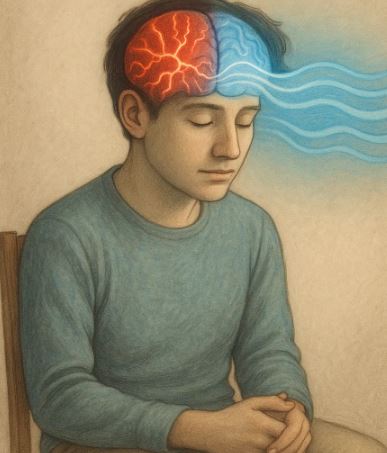
Does good balance on your feet make your brain sharper? Surprisingly, research suggests the answer may be yes. Every time your body keeps you upright, your brain is rapidly processing information from your eyes, inner ear, muscles, and joints. In other words, staying balanced isn’t just a physical skill it’s also a mental workout.
Quick Summary
Good balance isn’t simply a sign of strong legs. It reflects how efficiently your brain communicates with the rest of your body. Studies suggest that activities challenging your balance may also support attention, memory, coordination, and other important cognitive functions. While balance training isn’t a magic way to become smarter, it may help keep key brain networks active as you age.
Have You Ever Experienced This?
Maybe you can stand on one foot while brushing your teeth without thinking about it. Or perhaps you’ve recently noticed yourself feeling a little less steady while putting on your shoes, climbing stairs, or walking across an uneven path.
These small moments are easy to dismiss, but they reveal something fascinating. Every tiny adjustment your body makes to stop you from falling is directed by your brain, often in a fraction of a second. The better these systems work together, the more efficiently your brain is processing information behind the scenes.
Why Does Balance Challenge the Brain?
Your brain is constantly combining information from three major systems:
- Your eyes, which tell your brain where you are.
- Your inner ear (vestibular system), which detects movement and head position.
- Your muscles and joints (proprioception), which constantly report your body’s position.
Your brain merges all of this information almost instantly, deciding how to keep you upright before you’re even aware you’ve started to wobble.
That’s why standing on one foot is much more than a leg exercise—it’s a full-brain coordination task.
Signs Your Balance May Need More Attention
Everyone loses balance occasionally, but these situations may suggest your balance system deserves a little more training:
- You feel unsteady on uneven paths or grassy ground.
- You occasionally stumble for no obvious reason.
- You rely heavily on looking down while walking.
- Turning quickly sometimes makes you feel unstable.
- Walking and talking at the same time feels surprisingly difficult.
None of these automatically mean something is wrong, but they may be worth mentioning to a healthcare professional if they become frequent or worsen over time.
What Research Suggests
Researchers have found an interesting connection between balance training and brain function, particularly in older adults. Several studies suggest that exercises challenging balance may improve executive functions—the mental skills involved in planning, attention, decision-making, and problem-solving.
Scientists believe this happens because balance activates multiple brain regions simultaneously. Rather than exercising only your muscles, you’re also constantly training the communication pathways that help your brain process information efficiently.
What Most Articles Miss
Most people assume balance depends mainly on strong legs or a strong core.
In reality, your brain is the real balance coach.
Every second you’re standing, your brain is quietly combining information from your eyes, inner ear, muscles, and joints—making hundreds of tiny corrections you never consciously notice.
That means improving your balance isn’t just about preventing falls. You’re also giving your brain another opportunity to practice one of its most complex everyday jobs.
What You Can Try Today
You don’t need expensive equipment to challenge your balance.
Try one of these simple exercises:
- Stand on one foot for 15–30 seconds while holding a sturdy chair if needed.
- Walk heel-to-toe for one minute as if you’re walking along a straight line.
- Try Tai Chi or yoga, both of which gently improve balance, coordination, and body awareness.
- Walk on different safe surfaces, such as grass or sand, to encourage your brain to adapt to changing conditions.
Small amounts of regular practice are generally more effective than doing one long session every few weeks.When should you see a doctor? If you suddenly develop dizziness, frequent falls, worsening balance, or weakness on one side of your body, seek medical advice promptly, as these symptoms can sometimes indicate an underlying medical condition.
Quick Quiz: Myth or Fact?
Myth or Fact: Standing on one foot only strengthens your leg muscles.
Answer: Myth.
While your muscles certainly get stronger, your brain is doing much of the hard work. It is constantly integrating information from your eyes, inner ear, muscles, and joints to keep you upright. That’s one reason balance exercises may benefit both your body and your brain.