Diabetes management is changing faster than ever. For decades, people relied on finger-pricks, injections, and constant monitoring to stay safe. But today, a new generation of smart implants and devices is transforming how the body handles blood sugar. These tiny tools can track glucose for a year, release insulin automatically, or even rescue someone during a dangerous low-sugar episode.
In simple words:
The future of diabetes care is moving towards fewer injections, fewer emergencies, and more freedom.
Here are the most important new diabetes implants and safety devices to know in 2025.
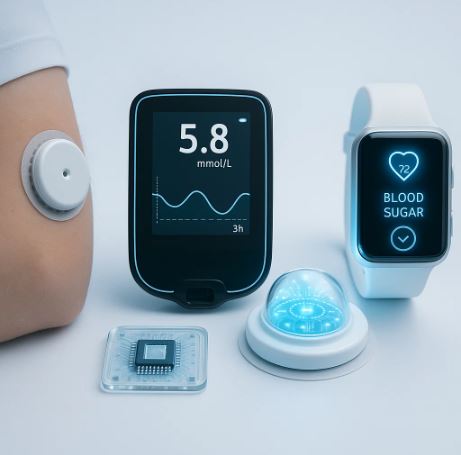
1. One-Year Implantable Glucose Sensor (Eversense 365)
This is a tiny sensor placed under the skin of the upper arm.
Why it’s useful
- Works for up to 1 year (much longer than 10–14 day sensors)
- Continuously tracks sugar levels
- Connects with insulin pumps for automatic insulin adjustments
Best for: people who want long-term glucose monitoring without frequent sensor changes.
2. Fully-Implantable Blood Sugar Monitor (Glucotrack)
A new device being developed that stays fully inside the body.
Why it’s useful
- Measures sugar directly from blood, giving fast and accurate readings
- Planned to last up to 3 years
- Less lag during sudden glucose changes
Best for: people who want more accurate readings than traditional skin sensors.
4. Oxygen-Powered Capsule with Insulin Cells
Another advanced implant, shaped like a capsule.
Why it’s special
- Holds insulin-producing cells
- Has a mini oxygen generator inside
- Helps the cells survive without heavy immune-suppressing drugs
Best for: long-term, natural blood sugar control through cell-based therapy.
5. Smart Insulin Patch (Microneedle Patch)
A painless patch that works automatically.
What it does
- Uses tiny microneedles you barely feel
- Releases insulin only when sugar rises
- Works like “smart skin”
Best for: people who want needle-free insulin delivery.
6. Emergency Glucagon Rescue Implant
One of the most important safety innovations.
Why it matters
- Stores glucagon, the hormone that raises blood sugar
- Can release it fast during a dangerous low
- May be triggered by a phone, sensor, or automatically
- Helps prevent nighttime or sudden lows
Best for: people at risk of severe hypoglycemia or unpredictable lows.
The Latest from MIT: The New Fast-Acting Glucagon Device for Low Sugar
One of the most exciting new developments comes from engineers at MIT: they’ve built a tiny implant (about the size of a quarter) that stores powdered glucagon under the skin. When blood sugar falls dangerously low, the device can be triggered — either manually or via a linked glucose monitor — to release glucagon quickly. In animal tests, it restored blood sugar to safe levels in under 10 minutes and worked even after some scar tissue formed around it. The researchers aim for this implant to last months or even years, offering a reliable “backup plan” for sudden low-sugar emergencies.
How it helps
- Releases glucagon within minutes when sugar drops too low
- Works even if the person is unconscious
- Useful for nighttime crashes
- Early tests show it canCorrect sugar levels in under 10 minutes
- Designed to last for months or years
This device acts like a built-in emergency responder, giving people peace of mind and a safety shield against severe hypoglycemia.
Final Thoughts
These latest diabetes implants aim to make life simpler, safer, and more independent. From long-lasting glucose monitors to insulin-producing cells and MIT’s new rescue implant, 2025 is bringing diabetes care closer to a future where:
✔ fewer injections
✔ fewer emergencies
✔ more stability
✔ and more freedom
are finally possible.