Have you ever felt your mind racing so fast that it refuses to stop — even when you’re exhausted?
That restless, “on-edge” feeling often has a quiet chemical story behind it, and the lead character is something called GABA.
Most of us talk about serotonin or dopamine when we think of mood, but GABA (gamma-aminobutyric acid) is the one quietly saving us from burning out. It’s the main calming neurotransmitter in the brain — the gentle hand that tells our overfiring neurons to slow down and breathe.
What GABA Is and Why It Matters
If your brain were a car, glutamate would be the accelerator, keeping you alert and active —
and GABA would be the brake pedal, ensuring you don’t crash from overstimulation.
When stress, anxiety, or overthinking flood your system, GABA steps in to quiet the storm. It helps your nervous system relax, promotes better sleep, lowers heart rate, and even protects your brain cells from burnout.
Without enough GABA, your brain feels like an engine stuck in overdrive — thoughts racing, muscles tight, emotions unpredictable.
How It Feels When GABA Is Low (or High)
If you’ve ever struggled with constant anxiety, irritability, or that “wired but tired” exhaustion, your GABA might be on the lower side.
Low GABA feels like:
- Racing thoughts that won’t turn off at night
- Restlessness, inner tension, or irritability
- Sensitivity to sound, light, or minor stress
- Muscle stiffness or twitching
- Craving alcohol, sugar, or comfort food just to relax
When GABA is low, glutamate takes over — like pressing the accelerator with no brakes. That’s why anxiety or panic spirals feel uncontrollable once they start.
On the other hand, balanced GABA feels completely different:
- A sense of quiet strength
- Slower breathing, relaxed muscles
- Clear, steady focus
- Emotional control and gentle optimism
- Warmth in social situations and genuine calm
Too much GABA (usually from sedative medications, not natural foods) can cause drowsiness or sluggishness — which is why balance, not excess, is the goal.
Foods That Naturally Support GABA
Here’s some good news: you can help your body build more GABA naturally.
Although GABA itself doesn’t easily cross into the brain, certain foods and nutrients boost its production.
Fermented and Sprouted Foods
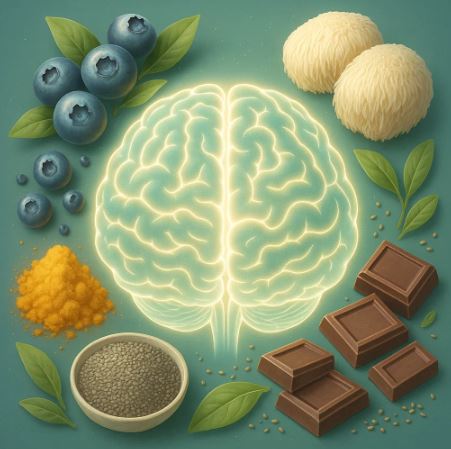
Fermented foods like kimchi, miso, yogurt, kefir, and tempeh are rich in natural GABA.
Sprouted brown rice, barley, or beans also contain higher GABA levels — germination activates enzymes that make it.
Green Tea & Veggies
Matcha green tea contains L-theanine, a compound that boosts GABA activity.
Bananas, spinach, and broccoli also gently support your nervous system’s calm chemistry.
Nutrients That Help You Make GABA
| Nutrient | What It Does | Food Sources |
|---|---|---|
| Vitamin B6 | Helps convert glutamate into GABA | Chickpeas, fish, potatoes |
| Magnesium | Improves GABA receptor binding | Dark chocolate, nuts, avocados |
| Zinc | Supports GABA receptor function | Pumpkin seeds, seafood |
| Taurine & Glycine | Help modulate GABA receptors | Eggs, meat, fish |
| Glutamine | Precursor to glutamate (and then GABA) | Cabbage, spinach, parsley |
A balanced diet rich in these nutrients helps your brain make and use GABA efficiently — no pills required.
The Latest Research on GABA (2024–2025)
Neuroscientists are now calling GABA the “anchor of emotional stability.”
Here’s what recent studies reveal:
- Depression: People with major depression have lower GABA in key brain regions. New antidepressants aim to restore GABA balance instead of only boosting serotonin.
- Sleep: Those who sleep deeply tend to have higher GABA levels. Magnesium, theanine, and valerian help enhance this natural rhythm.
- Migraines: MRI studies show migraine sufferers often have reduced cortical GABA, making their brains more excitable. Boosting GABA activity could help prevent attacks.
- Autism: Altered GABA/glutamate ratios affect sensory comfort and emotional processing.
- Gut-Brain Axis: GABA receptors also exist in the heart and gut — another reason why fermented foods calm both digestion and mood.
- Epigenetics: Chronic stress can suppress genes that produce GABA, but mindfulness and consistent sleep can switch them back on.
What Else You Should Know
GABA supplements are a bit controversial — most don’t easily cross into the brain, but some people still report a calm feeling. Scientists suspect this happens through the gut–brain connection, where GABA made by gut bacteria communicates with the nervous system through the vagus nerve.
You can boost GABA naturally by:
- Practicing slow breathing, yoga, or meditation
- Listening to soothing music or getting a massage
- Limiting caffeine, nicotine, and excess sugar, which drain GABA
- Sleeping at regular hours
Interestingly, alcohol and anxiety medicines (benzodiazepines) mimic GABA — which is why they feel relaxing at first — but they also reduce your body’s own GABA production over time, leading to rebound anxiety.
In Essence
GABA is your mind’s peacekeeper.
It quiets the chaos, steadies your emotions, and gives your brain a chance to rest.
When nourished — through magnesium-rich foods, deep sleep, and mindful living — it helps you feel present, unhurried, and quietly powerful.
Your calm isn’t a mystery. It’s chemistry — and GABA is at the heart of it.