Your Immune Army Explained: Innate vs Adaptive Immunity Made Simple
Welcome to the fascinating world inside your body! Imagine your body as a bustling kingdom, constantly under threat from invisible invaders like bacteria, viruses, and even everyday injuries. That’s where your immune system steps in—it’s your built-in defense force, a tireless army working 24/7 to keep you safe and healthy. Immunity is essentially this army’s ability to recognize and neutralize threats, repairing damage along the way. Think of it as a royal guard: some soldiers are always on patrol, while others train for specific battles. In this article, we’ll meet the key players, break down the two main branches of this army, and share simple habits to keep your defenses strong. Let’s dive in!
The Battlefield: Where the Action Happens
Before we meet the soldiers, picture the terrain they fight on. Your bloodstream acts like a network of highways, allowing troops to rush to trouble spots quickly. Lymph nodes serve as command centers where strategies are planned and memories of past threats are stored. Tissues and organs are the front lines, where invaders first try to breach. This setup ensures your immune army can respond anywhere, anytime—whether it’s a cut on your skin or a virus in your lungs.
Meet the Soldiers: Your Immune Heroes
Your immune army is made up of specialized cells, each with a unique role.
We’ll use metaphors to make them memorable, like characters in an epic battle story.
– Macrophages (The Guards): These are the vigilant sentinels patrolling your kingdom. They engulf and digest invaders like bacteria or debris, acting as the first line of defense. Imagine them as burly castle guards swallowing thieves whole to protect the gates.
– Neutrophils (The Frontline Infantry): Quick and aggressive, these soldiers swarm to infection sites in huge numbers. They’re like a mob of foot soldiers overwhelming enemies with sheer force, releasing chemicals to destroy threats and clean up the mess.
– Dendritic Cells (The Scouts or Intelligence Officers): These clever operatives spot dangers early, capture samples (called antigens), and rush to alert the rest of the army. Think of them as spies gathering intel on the enemy’s weaknesses and briefing the commanders.
– T-Cells (The Snipers): Precise and deadly, T-cells target infected cells directly, eliminating them before the threat spreads. They’re like elite snipers taking out hidden foes with laser-focused accuracy, ensuring no collateral damage.
– B-Cells (The Memory Keepers): These are the archivists of the army. They produce antibodies—custom weapons that tag invaders for destruction—and remember them for future encounters. Picture them as librarians who file away blueprints of enemies, ready to mass-produce defenses if they return.
The Ancient Defenses
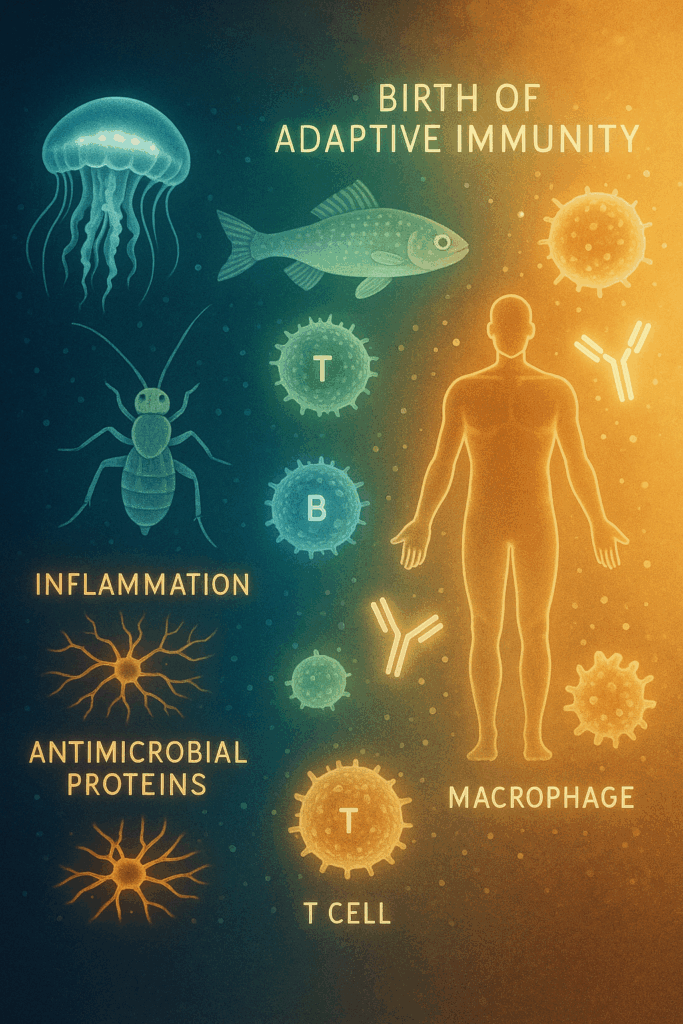
Long before humans existed, life still needed protection. Insects and jellyfish used inflammation and antimicrobial proteins as built-in shields. About 500 million years ago, fish developed something revolutionary: adaptive immunity—the power to “remember” past threats and respond smarter the next time.
That same system protects us today with T cells, B cells, and antibodies. Evolution didn’t reinvent the wheel—it upgraded it.
| Ancient Defense | Modern Equivalent |
|---|---|
| Inflammation in insects/jellyfish | Fever, swelling, redness when you’re sick |
| Antimicrobial proteins | Antibiotics your body makes naturally |
| Fish adaptive immunity | Human T cells, B cells, antibodies |
How the Soldiers Communicate No army wins without coordination. Immune cells use chemical messengers called cytokines, like sending urgent dispatches or messenger pigeons across the battlefield. For example, when a macrophage (guard) spots trouble, it releases cytokines to summon T-cells (snipers) for a targeted attack. This teamwork turns chaos into a symphony of defense.
Breaking Down Immunity: Innate vs. Adaptive
Your immune army is divided into two main branches, each with its strengths. Here’s a simple comparison:
| Aspect | Innate Immunity (Rapid-Response Unit) | Adaptive Immunity (Elite Special Forces) |
|---|---|---|
| Speed | Fast and immediate — ready from birth. | Slower to activate but highly precise. |
| Specificity | General defenses against any threat. | Tailored to specific enemies, with memory. |
| Examples | Skin barriers, mucus, fever; macrophages and neutrophils eating bacteria. | T-cells killing viruses; B-cells making antibodies after a vaccine. |
| Metaphor | Castle walls and moats blocking intruders instantly. | Training assassins with photographic memories for repeat offenders. |
The innate branch is your body’s first responder
—born ready to fight common threats without prior experience. It’s like automatic alarms and traps in your kingdom. The adaptive branch, on the other hand, learns and adapts. It kicks in after the innate team identifies a foe, creating custom strategies. The bridge between them? Innate cells like dendritic scouts “hand off” antigen intel to adaptive ones, saying, “Here’s the enemy’s ID—now customize your attack!” This handover ensures a seamless escalation from general alert to specialized warfare.
Quick Takeaways for Beginners:
Simple Habits to Keep Your Army Alert You don’t need a PhD to support your immune army—just everyday tweaks. These habits aren’t magic cures but proven ways to keep your soldiers sharp and ready. Remember, consistency is key!
– Sleep Well: Aim for 7-9 hours nightly. It’s recharge time when your body rebuilds T-cells and processes memories—like soldiers sharpening weapons and reviewing battle plans overnight.
– Eat Nutritiously: Load up on colorful fruits, veggies, and whole foods for vitamins (e.g., Vitamin C boosts white blood cells). Think of it as supplying fresh ammo and fuel to your troops.
– Exercise Moderately: Activities like walking or yoga pump lymph fluid, speeding up troop movement. But avoid overdoing it—exhausted soldiers can’t fight effectively.
– Manage Stress: Try mindfulness or deep breathing; chronic stress raises cortisol, which fogs the battlefield and weakens guards. Keep your army clear-headed!
– Stay Hydrated and Hygienic: Drink plenty of water to maintain moist barriers like mucus, and wash hands to block enemy entry at the gates. Simple prevention saves battles.
– Get Vaccinated: Vaccines are like boot camp drills—exposing your army to harmless “fake” enemies so B-cells (memory keepers) can log them and respond faster to real threats. These tips draw from basic physiology: Better habits mean stronger cell production, faster signaling, and resilient barriers.
Common Myths Busted Let’s clear up some confusion to keep things accurate:
– Myth: Getting a cold means your immune system is weak.
Reality: Colds are often from new viruses—it’s just your army training against unfamiliar foes, building adaptive memory.
– Myth: You can “boost” your immunity overnight with supplements.
Reality: True strength comes from balanced habits; over-relying on pills might not help and could even imbalance your forces.
– Myth: Fevers are always bad.
Reality: A mild fever is your innate army’s tactic to make the battlefield too hot for invaders—it’s a sign of active defense!
When the Army Goes Rogue Most of the time, your immune army is a reliable protector. But sometimes, it mistakes friendly cells for enemies, leading to “friendly fire” like autoimmune conditions (e.g., rheumatoid arthritis, where joints are attacked). Allergies are another glitch—overreactions to harmless things like pollen. The good news? Medical help, like treatments or lifestyle adjustments, can retrain or calm the troops. If symptoms persist, consult a doctor—don’t ignore rogue signals!
Final Thoughts:
Observe Your Own Army You’ve now got a frontline view of your immune army— from guards and snipers to rapid responders and memory keepers. Next time you feel under the weather, picture the epic battles happening inside: macrophages gobbling germs, T-cells sniping viruses, all coordinated for your victory. Start with one habit today, like better sleep, and watch your defenses strengthen. Curious for more? Share your thoughts or questions—your kingdom awaits! Stay healthy, warriors.