Immunity Series: From Evolution to Everyday Health
We’re beginning a new series dedicated to one of the most fascinating and vital aspects of human life—our immune system. From its origins in evolution to its complex modern-day functions, immunity shapes how our bodies survive, adapt, and heal. In this series, we’ll explore everything step by step: the basics of how immunity works, the advanced concepts behind protection and disease, and the realities of autoimmune challenges. Most importantly, we’ll connect this knowledge to practical, everyday ways of strengthening and managing our immune health.
Immunity Series Part#1: The Forgotten Origin of Immunity
What is immunity really? Not just “fighting germs” — but a survival system shaped from primitive times.
In today’s world, we often think of immunity as vaccines, antibiotics, or white blood cells chasing down viruses. But this picture is incomplete. Immunity is far older, forged over billions of years as life’s shield against any threat — not just infections.
We’ve reduced it to medical terms, forgetting its deep roots. In reality, immunity is woven into our stress responses, our sense of self, and even our emotions. This article begins a series exploring those forgotten origins. We’ll start simple, then build toward deeper insights, showing how immunity evolved as a guardian of boundaries — physical, emotional, and even existential.
From Primitive Life to Human Defenses
Immunity didn’t start with humans. It began with the earliest living cells, which had to recognize what belonged inside and push out what didn’t. That was the first immune system: the art of protecting boundaries.
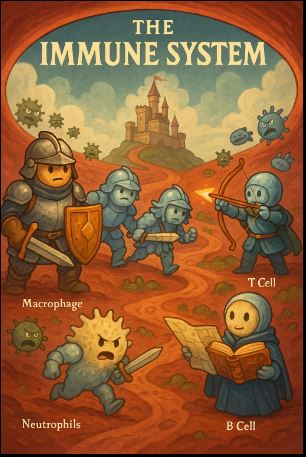
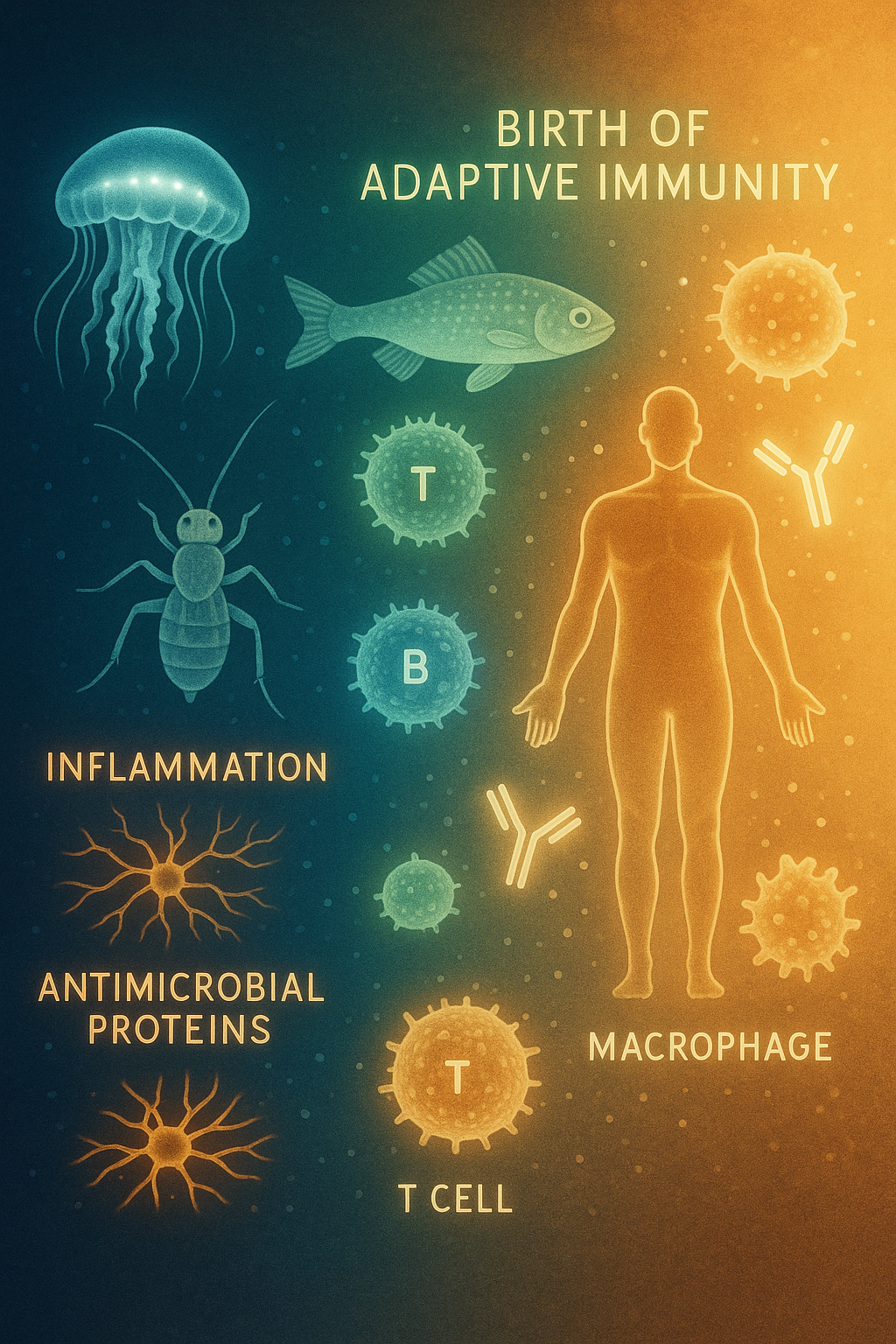
As life became more complex, so did immunity. Insects and jellyfish used inflammation and antimicrobial proteins as built-in defenses. About 500 million years ago, fish developed adaptive immunity — the ability to “remember” threats and respond smarter the next time. That’s the same system we rely on today with T cells, B cells, and antibodies.
But immunity didn’t evolve in isolation. It grew hand-in-hand with another survival tool: the stress response.
Following table provides a quick summary:
| Ancient Defense | When it Appeared | Modern Equivalent | Simple Explanation |
|---|---|---|---|
| Inflammation & antimicrobial proteins | >1 billion years ago (insects, jellyfish) | Fever, swelling, pus | First responders – like a security alarm that makes the intruder visible. |
| Phagocytes (cells that “eat” invaders) | ~800 million years ago | Neutrophils, macrophages | Body’s “clean-up crew,” swallowing germs and debris. |
| Complement proteins (chemical attackers) | ~600 million years ago | Same system in humans today | Acts like landmines: once triggered, they blast holes in microbes. |
| Adaptive immunity (memory system) | ~500 million years ago (fish) | T cells, B cells, antibodies | Like installing antivirus software – remembers past infections for faster defense. |
| Major Histocompatibility Complex (MHC) | ~400 million years ago | Human HLA proteins | ID cards for cells – show immune system what belongs vs what doesn’t. |
| Stress-linked immune response | Always present, but amplified in mammals | Cortisol, cytokines | Stress acts like a boss shouting orders – sometimes helpful, but too much causes chaos. |
Boundaries: Body and Self
At its core, immunity is about boundaries. It constantly asks: Is this me or not me?
- At the cellular level, it protects your body from invaders.
- At the psychological level, boundaries protect your emotional space.
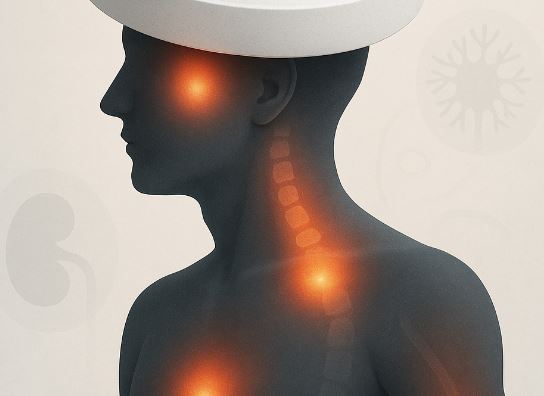
Just as skin blocks germs, healthy boundaries shield us from stress or toxic relationships. When we suppress feelings or stretch ourselves too thin, stress rises and the immune system falters. Sometimes it even turns against us, mistaking self for enemy.
Everyday Clues
The immune system speaks to us every day — often in ways we don’t notice:
- Racing heartbeat when holding back anger → stress firing up inflammatory signals.
- Tears when insulted → emotional release mixed with real antibacterial enzymes.
- Fever during infection → the body raising its heat to fight intruders.
- Butterflies in the stomach → stress stirring the gut-immune connection.
Our biology and emotions are not separate stories. They are threads of the same survival fabric.
Closing
Immunity is not just a hidden army of cells. It is a mirror of how we live, how we stress, and how we protect our sense of self. By remembering its origins, we can begin to see health as more than the absence of disease — it becomes the art of preserving our wholeness.
Next in the series: Immunity Army First Look