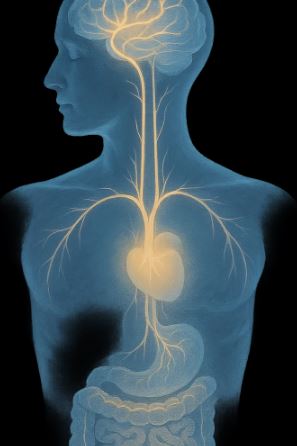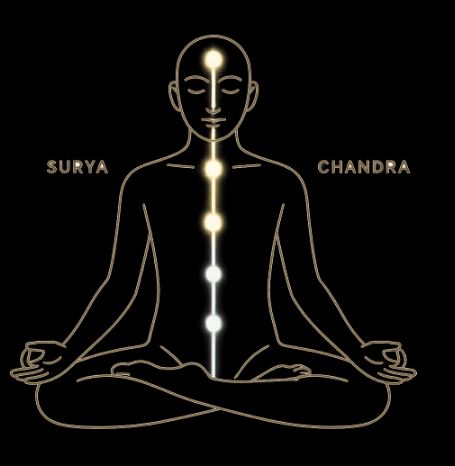
Breath is the primary regulator of autonomic tone. In classical Ayurveda and yogic physiology, each nostril is associated with a specific energy channel—Surya Nadi (Pingala) on the right and Chandra Nadi (Ida) on the left. Although most people perform alternate-nostril breathing without understanding the underlying mechanisms, both nadis have completely different biological effects.
Surya Nadi Pranayama (right-nostril breathing) heats the body and stimulates digestion, while Chandra Nadi Pranayama (left-nostril breathing) cools the system and calms the mind. Both techniques regulate the autonomic nervous system and balance sympathetic–parasympathetic activity when practised together
This article explains how each technique influences thermoregulation, digestion, mood, and neurological arousal, and how to use them safely before and after exercise, meditation, and daily routines.
1. Surya Nadi Pranayama (Right-Nostril Breathing)
Primary activation: Right nostril → Pingala Nadi → Sympathetic tone
Physiological & Ayurvedic Effects
Right-nostril breathing produces a warming, stimulating response:
- Raises core temperature by activating sympathetic outflow
- Increases metabolic rate and strengthens jatharagni (digestive fire)
- Reduces kapha accumulation that causes heaviness, lethargy, water retention
- Improves appetite regulation, particularly in people who “forget to feel hunger”
- Counters depressive states by enhancing alertness and dopaminergic activation
- Destroys sluggishness and morning inertia
- Enhances oxygen consumption and prepares the body for physical activity
Clinically, right-nostril breathing has been shown to increase heart rate, systolic blood pressure, and oxygen uptake—mirroring the effects of controlled sympathetic activation.
2. Chandra Nadi Pranayama (Left-Nostril Breathing)
Primary activation: Left nostril → Ida Nadi → Parasympathetic tone
Physiological & Ayurvedic Effects
Left-nostril breathing produces a cooling, calming response:
- Lowers internal heat, useful during hot climates or post-exertion
- Reduces sympathetic overdrive, easing agitation and sensory overload
- Soothes migraines, especially heat-triggered headaches
- Useful in heat strokes, facial flushing, and excess pitta
- Stabilizes emotional turbulence and overthinking
- Regulates sleep initiation, calming the pre-sleep hyperarousal
Clinical studies show left-nostril breathing reduces heart rate, lowers stress biomarkers, and enhances vagal tone.
3. Why Balancing Both Matters
Using both nostrils (Nadi Shodhana) brings the body to a neutral, bi-hemispheric equilibrium.
Expected outcomes:
- Balanced sympathetic–parasympathetic activity
- Improved emotional stability
- Increased mental clarity and decision-making
- Reduction in anxiety and irritability
- Enhanced readiness for meditation
- Long-term positivity and stable mood
This balanced state is crucial before spiritual practices because it prevents dominance of either excessive drowsiness (kapha) or agitation (pitta/vata).
4. Techniques: Anulom, Vilom & Nadi Shodhana
Below are precise, Ayurvedic-based steps and clinically safe timings.
A. Surya Nadi Pranayama (Right-nostril breathing – activates heat)
Steps:
- Sit in a straight-spine posture.
- Close the left nostril with the ring finger.
- Inhale and exhale only through the right nostril.
- Breathe deep but smooth, without strain.
Timing (Ayurvedic):
- Morning (after waking) to remove dullness
- Before meals to stimulate agni
- Before exercise to generate internal heat
Duration: 3–5 minutes for beginners, up to 10 minutes for trained practitioners.
Avoid:
- During fever
- During peak summer
- In hyperthyroidism, hypertension, migraines triggered by heat
B. Chandra Nadi Pranayama (Left-nostril breathing – activates cooling)
Steps:
- Sit comfortably with a relaxed abdomen.
- Close the right nostril with the thumb.
- Inhale and exhale only from the left nostril.
- Let the breath be slow and cooling.
Timing (Ayurvedic):
- Evening to wind down mental activity
- During heat, agitation, pitta imbalance
- Before sleep
- After exercise, especially in summer
Duration: 3–10 minutes.
Avoid:
- In extreme cold
- If you feel too sluggish or low in mood
- Before morning exercise (can reduce performance)
C. Anulom-Vilom (Alternative nostril without retention)
This is a balancing practice.
Steps:
- Close right nostril → Inhale left.
- Close left nostril → Exhale right.
- Inhale right → Close → Exhale left.
- That completes one cycle.
Timing:
- Before meditation
- After office stress
- After workouts (2–3 minutes of Chandra + Anulom-Vilom)
Duration: 5–15 minutes.
D. Nadi Shodhana with Kumbhaka (Retention) – Advanced
Only if the practitioner has good lung capacity and no hypertension.
This involves inhaling, holding (kumbhaka), and exhaling in ratios like 1:4:2.
Promotes strong balance of the nervous system and deeper meditative states.
5. Why Timing Matters: Biological Logic
Before Exercise
- Surya Nadi raises heart rate and body temperature
- Improves blood flow to muscles
- Activates sympathetic drive → more energy
This prevents muscle stiffness and sudden fatigue.
After Exercise
- Chandra Nadi cools tissue heat
- Reduces post-exertional headache
- Prevents electrolyte derangement
- Helps shift from sympathetic to parasympathetic recovery mode
Before Meditation
- Anulom-Vilom / Nadi Shodhana is ideal
- Removes nostril dominance
- Calms mental noise
- Stabilizes heart-rate variability, improving focus
Before Sleep
- Only Chandra Nadi
- Reduces cortisol spikes
- Stops midnight adrenaline surges
- Helps in thermoregulation which is essential for sleep initiation
6. Summary Table
| Practice | Nostril | Ayurveda Effect | Clinical Effect | Best Time |
|---|---|---|---|---|
| Surya Nadi | Right | Increases heat, burns kapha, strengthens agni | ↑ Sympathetic tone, ↑ metabolism | Morning, before food, before exercise |
| Chandra Nadi | Left | Cools pitta, calms mind | ↑ Parasympathetic tone, ↓ HR | Evening, before sleep, after exercise |
| Anulom-Vilom | Both | Balances doshas | Stabilizes HRV | Before meditation |
| Nadi Shodhana (Advanced) | Both | Purifies prana | Deep autonomic balance | Intermediate to advanced practice |