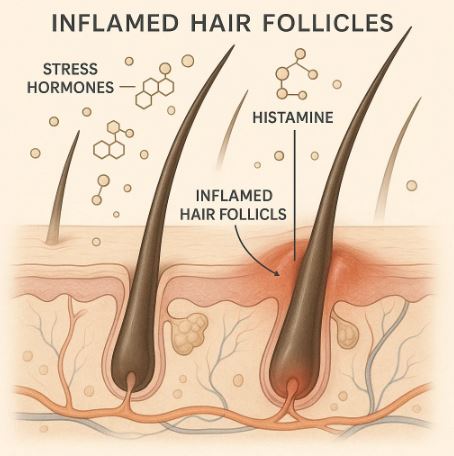
Have you noticed that stress increases the hair fall? But not only mental — even physical stress can make your hair shed more.
This is a common experience, yet most people do not know the deeper biochemical reasons behind it. Stress is more than a feeling. It is a physiological chain reaction involving hormones, immune responses, and inflammation. One of the key players in this process is histamine, a compound that becomes highly active when your body is under pressure.
Let’s break the science down step by step.
The Stress–Cortisol–Histamine Connection
When your body experiences stress (emotional distress, lack of sleep, dehydration, heavy exercise, or even cold exposure), it activates the hypothalamic-pituitary-adrenal (HPA) axis.
This triggers your adrenal glands to release cortisol, commonly known as the stress hormone.
But cortisol doesn’t act alone.
High cortisol levels send signals to mast cells — immune cells that release histamine. Under stress:
- Mast cells become hyperactive
- Histamine is released into the bloodstream
- Inflammation increases
- Blood vessels dilate, then constrict
- Sensitivities to food, weather, and chemicals rise
So yes, stress and histamine are deeply connected. If your body is sensitive to histamine, stress can amplify every symptom—including hair fall.
How to Know If Your Histamine Levels Are High
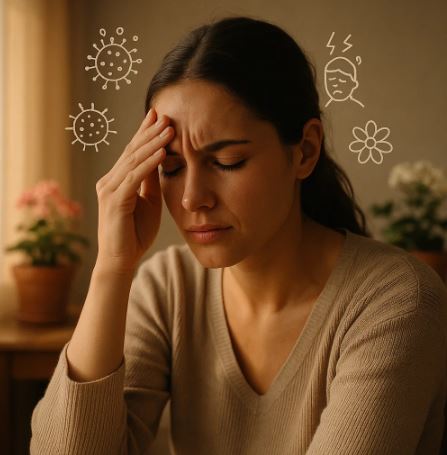
You may be dealing with high histamine if you notice:
- Headaches or migraines
- Itching of scalp or skin
- Runny nose or sinus pressure
- Flushing or warmth after eating spicy foods
- Sensitivity to cold air
- Digestive discomfort
- Heart palpitations
- Increased hair shedding after spicy meals or high-stress days
These are classic signs that histamine is circulating at high levels or that your body is unable to break it down efficiently.
How Histamine Triggers Hair Fall
Histamine directly affects hair in three ways:
1. Scalp Inflammation
Histamine creates micro-inflammation around hair follicles. This weakens the follicles and interrupts their growth environment.
2. Follicles Shift Into Shedding Phase
Histamine signals hair follicles to prematurely enter the telogen phase, the stage where shedding naturally occurs.
More histamine → more follicles entering telogen → more hair fall.
3. Vascular Instability
Histamine first dilates and then sharply constricts blood vessels. This unstable circulation reduces the oxygen and nutrients reaching your follicles.
The result? Increased, noticeable hair fall during stress.
Other Activities That Increase Histamine and Hair Fall
Your hair fall may worsen with:
- Spicy foods or chili powder (TRPV1 activation → histamine release)
- Alkaloid-rich foods like fenugreek, ajwain, ginger, sesame
- Dehydration (less blood volume, higher histamine concentration)
- Cold allergy (cold urticaria → mast cell activation)
- Intense workouts
- Lack of sleep
- Sudden fasting or long gaps between meals
All of these are known histamine liberators.
Remedies to Control Stress-Induced Hair Fall
You can reduce shedding significantly by calming both cortisol and histamine.
1. Hydration First
Drink water throughout the day to reduce histamine concentration and support scalp circulation.
2. Add Vitamin C & Quercetin-Rich Foods
These stabilize mast cells naturally—like amla, apples, onions, coriander, and berries.
3. Avoid Triggers Temporarily
Reduce chili, fermented foods, alkaloids, and cold exposure until symptoms settle.
4. Improve Sleep Rhythm
Sleep regulates cortisol more than any supplement.
5. Magnesium & B-vitamins
These support stress pathways and reduce histamine sensitivity.
6. Scalp Cooling Packs
A cold compress (but not too cold) calms inflammation and reduces itching.
7. Breathing & Gentle Movement
Slow breathing, stretching, or yoga instantly lower cortisol peaks.
With consistent care, stress-related hair fall becomes manageable and often reversible.